Companies spend hundreds of thousands of dollars each year on sanitation and pest control at their facilities along with thousands of hours on training personnel or vetting outside contractors to properly handle sanitation tasks or spend hours documenting the completion of those tasks. Either way, they want to provide the highest level of quality to ensure the best product is produced without contamination. The fabulous news is I’m going to share with you their secrets that you can do in your own home.
The professionals know that when the weather changes for the worse or nearby vacant fields are disturbed by construction or an idle facility comes to life, the displaced vermin, (rats, and mice) will find a new place to call home and raise a family but you can avoid infestation following these professional tips to make your home inhospitable to them, and it all begins with a walk around.
The walk-around is critical to maintaining any facility. It’s your way of being proactive, finding what needs to be repaired while getting a little exercise, and then getting those repairs done expeditiously. Walkarounds should be conducted consistently and once a month is an excellent schedule. Walk the entire perimeter of your home, looking for points of entry from the vermin’s point of view. You are looking for small openings, any small cracks or holes should be noted for repair as they don’t need much space to squeeze through. A mouse can fit through a hole as small as 2 cm (.787 of an inch), while a rat only needs a hole the size of a quarter to get into your home. Also make note of any vegetation, weeds, shrubs, trees or grass that’s abutted up to the house. That should be cut back or removed since it provides cover for the critters. Are there large gaps underneath the outside doors like the side door of the garage? Is the area where your trash bins are stored free and clear of trash, scraps, and clutter and are they sealed properly keeping trash secure from critters? Take care of repairs immediately as procrastination will set you back and create more problems.
Now you complete a walk around inside the home. Again look for openings around valves and pipes under sinks, the furnace/AC, and the laundry room. If they get into the garage and the walls this is how they’ll enter your living areas. After identifying your problem areas get the needed materials and do the repairs immediately.

To resolve the problem of a large gap under your side doors you can purchase and install a Door Sweep.

Now, with that accomplished, we’re going to add an extra level of protection by setting traps in different areas not just to trap those unwanted guests but also to alert you if the problem is remaining stable or getting out of hand and needs more attention. I tried different traps and found some more effective than others. There is one covered trap, to spare you from seeing the dead, which is the worst with a 40-50% kill rate. The best trap I found that never missed a beat with a 100% kill rate was Ankace Power Rodent Killer. I have 6 traps set up, one on each side of the garage roll-up door, one by the garage side door, one on the side of steps leading into the house from the garage, one under the kitchen sink, and one in the heating/AC closet. 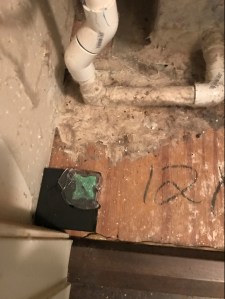
If you have pets set the traps where they can’t get to them. If the idea of traps bothers you then you can buy bait traps and place those in the same locations as you would the traps and also around the outside of the house. I have a combination of both around my house. I also keep non-latex gloves and zip lock bags on hand for those times I have to clear a trap, which by the way hasn’t happened in quite a long time. If you are doing everything else right you won’t be emptying traps every day and as I said before, the traps are also an alert that something has changed. Once you have this all in place, set yourself a reminder and check the traps regularly for activity, at least once a week.
When it comes to the professionals, they use a posted schedule to remind them what to clean and how often. It’s called a master sanitation schedule, posted for all to see. It records the date, item to be cleaned, how often to clean it, who’s responsible and the signature or initials so they know when what and how. Next time, we’ll show you how you can use that at home too.
 Witzshared
Leave a comment